





|
Pinebluff Town History
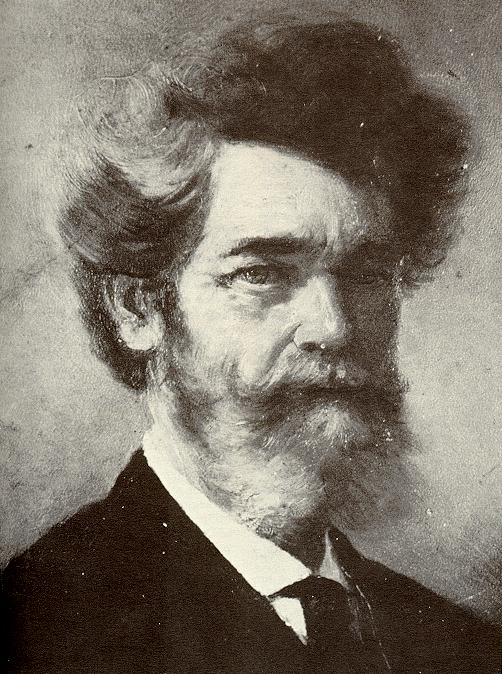
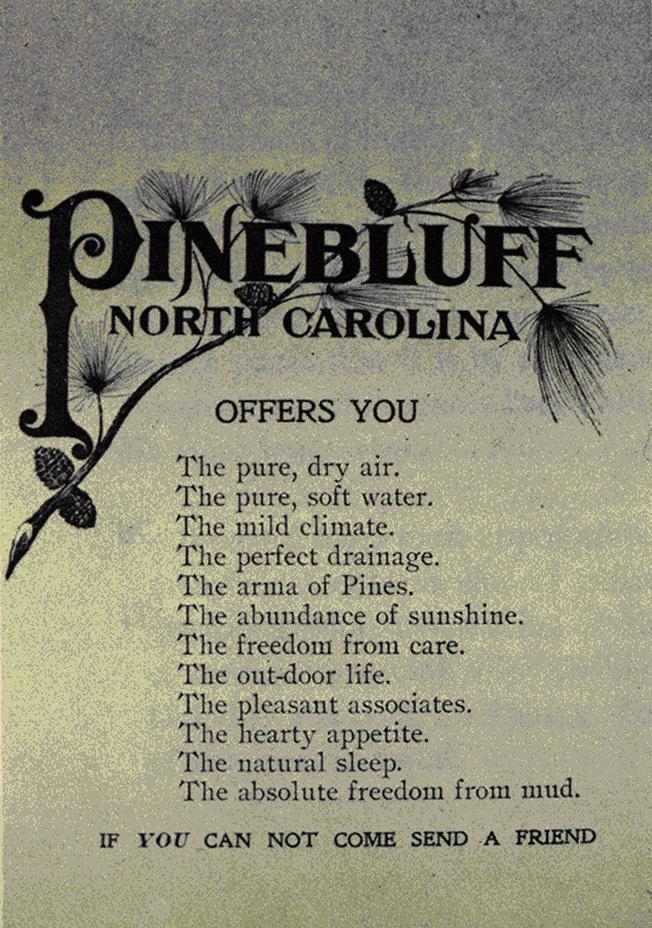 To entice new settlers to the area, Patrick advertised in Northern newspapers
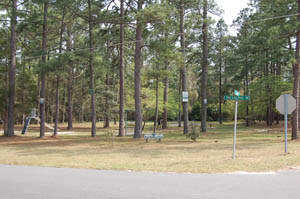
and published brochures extolling the terrain, the climate, and the healthful advantages of the pine-scented air. Pinebluff's location alongside the tracks of the Seaboard Air Line Railway, along with Patrick's position as Industrial Agent for the Railway, were used to help develop the location as a winter resort. Patrick also designed the layout of the town, organizing it on a rectangular grid of streets and blocks. Two of the unique features of his design were the 100 feet wide street right-of-ways and center squares (each with four alleys leading to it) in the middle of each residential block. The center squares have been deeded over to surrounding households, but the extra wide streets remain, with unpaved walkways lined by tall pines serving as footpaths for the town. The names of Pinebluff's east-west avenues (Chicago, Baltimore, Philadelphia, New England, and Boston) illustrate the areas from which Patrick hoped to attract settlers. Early residents of Pinebluff included the Couch family from Tilton, New Hampshire, the Packards from Argyle, New York, the Achorns from Boston, Massachusetts, and the Fiddners from Danbury, Connecticut. In 1903, when the Railway failed to renew his contract and when a majority of the citizens of Pinebluff failed to approve a tax to support his promotion of the town, Patrick departed the area. Before his death in the 1918 influenza epidemics, Patrick established yet another resort town in Chimney Rock, North Carolina.
Pinebluff was incorporated as a town in 1899, under the leadership of a mayor and a five-member elected governing board. At that time, the population of the town totaled 15 and seven of them comprised the town government and administration. This same structure is in place today. A mayor and a five-person Board of Commissioners serve two year terms with elections held in odd-numbered years. Pinebluff's first street lights were kerosene and were attended to by lamplighters, Mr. VanBoskerck and Mr. McDonald. The first electric lights were powered by a dynamo located at the Pinebluff Lake dam. Lights were run from the lake to the railway depot and colored lights were strung to catch the attention of railroad passengers. Local power generators provided electricity to the town until they were all absorbed by Carolina Power and Light. The lake was also the source of Pinebluff's first running water as water was pumped from the lake to storage tanks on the west side of town. In 1913, the town issued its first municipal bonds and purchased the water system. Today, Pinebluff draws it water from four wells located on the western part of town. The telegraph was Pinebluff's first electronic communications link. In 1893, Western Union opened a telegraph office in the train depot. One year later, a line was run from the center of town to the depot. In 1897, John Patrick installed five primitive telephones in town. These were replaced when A. G. Wallace installed a switchboard system in his home. The Wallace family operated the switchboard system until 1957 when it was replaced by a dial system. 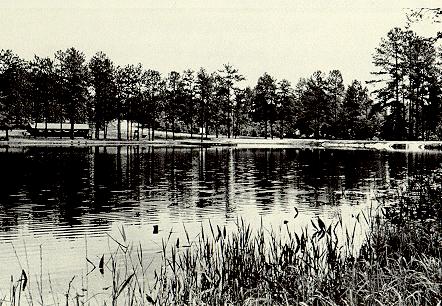
Pinebluff did not evolve into a resort as its original founders desired.
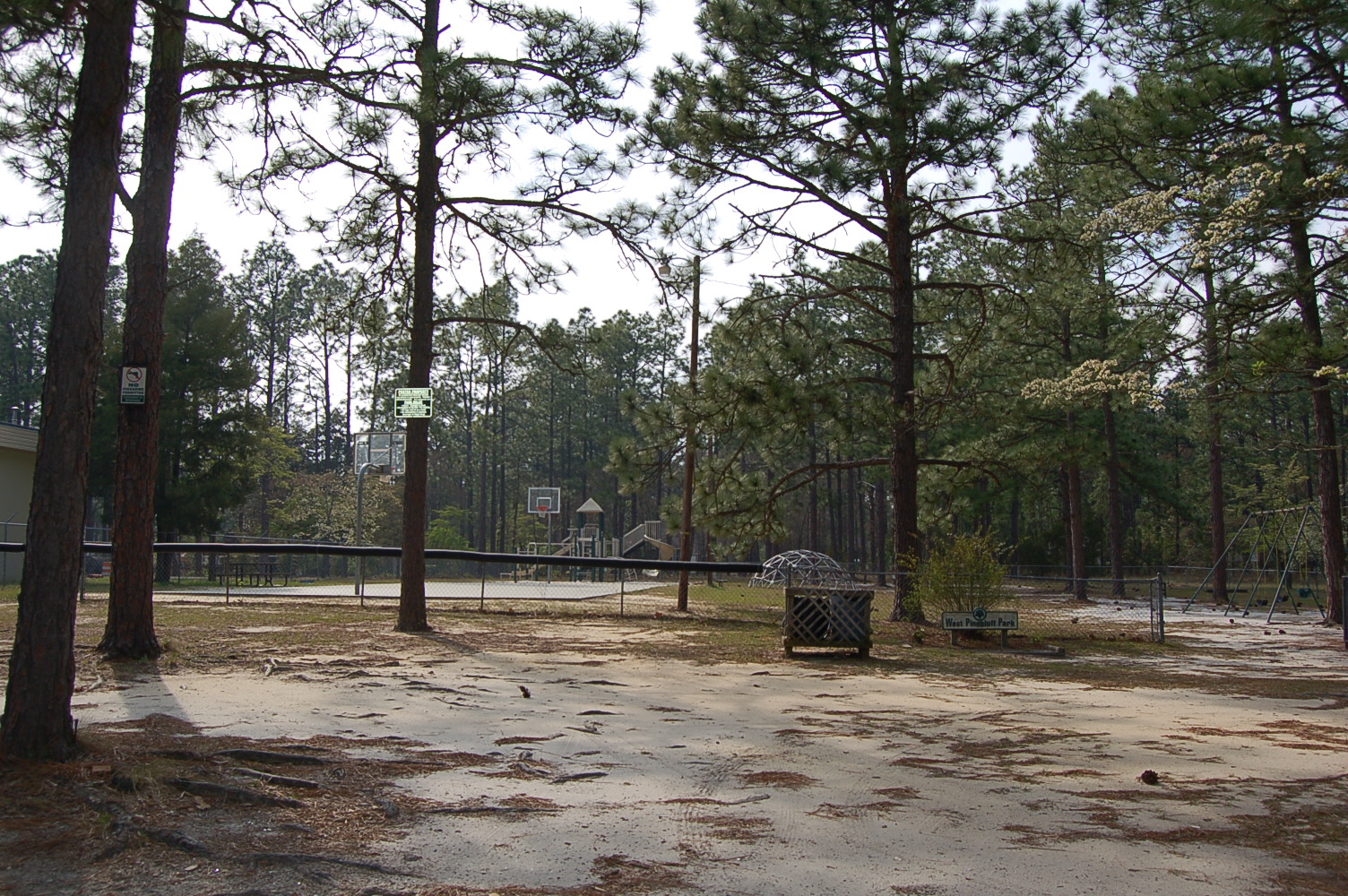
Today, Pinebluff is still a small, primarily residential, community
of about 1,000 inhabitants. The automobile has taken predominance over
the
railroad and the main thoroughfare through Pinebluff is no longer the
train tracks, but rather is the north-south U.S. Highway 1. Though
the original
sand streets and avenues have mostly been paved, the town retains much
of its original character with its tree-lined roads and walkways, its
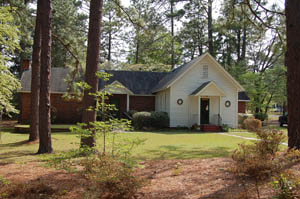
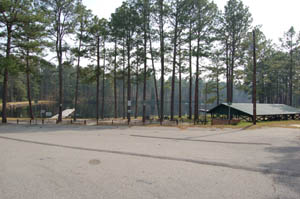
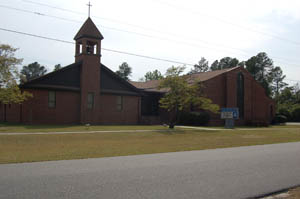
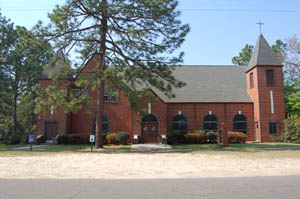
two original churches, its ecologically diverse lake, and its mix of
old and
new homes in and among the pines. _________________________________________________________________________________________________ [Primary source for this page is Pinebluff, North Carolina, a town history compiled by The Pinebluff Historical Committee and published in 1976 by the Town of Pinebluff. Copies may be obtained at the Town Hall.] _________________________________________________________________________________________________ *Links below contain large pdf files requiring Adobe Acrobat Reader to view More History 1 More History 2
|